
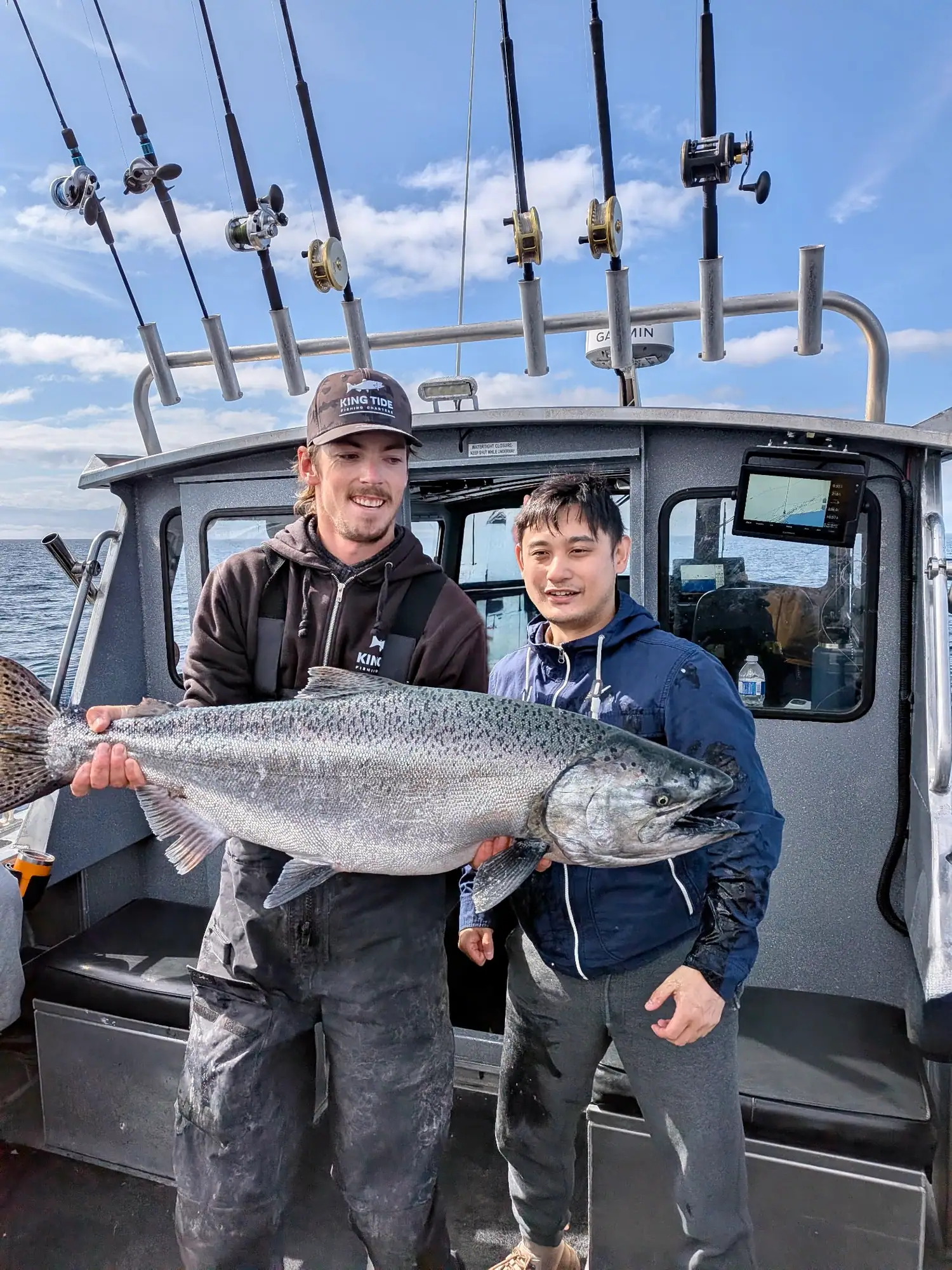
When the salmon begin pushing toward their spawning rivers, something changes on the halibut grounds off Sooke. The days grow cooler, boat traffic drops and the bottom-fishing rhythm often sharpens. This is the part of the season when a quiet rod tip can turn into a full spread going off at once.
At King Tide, we have seen four or five halibut rods load up within moments of each other. One angler is lifting into a fish, another reel starts giving line, and then the rod across the stern folds over. Halibut can feed in groups, and when a hungry group moves through the scent field, the bite can go from patient to full-on very quickly. That is fall halibut fishing in Sooke at its best: deliberate preparation followed by a fast, physical battle with one of the North Pacific’s great flatfish. If you're new to it, our guide to halibut fishing in Sooke covers the basics, the season and what a typical trip looks like.
Why the Fall Bite Can Improve
The fall halibut bite is often described around the dock as heating up when salmon start spawning. The timing is real in our local fishing experience, but it is better understood as a seasonal transition than as one simple cause. Salmon are moving through coastal waters and into rivers. Currents, water temperature, forage and predator distribution are changing at the same time. Halibut are opportunistic predators, and International Pacific Halibut Commission research shows that larger halibut eat a varied diet dominated by fish and cephalopods, including herring, salmon and octopus.
For a Sooke guide, those biological facts meet years of observation on particular banks, edges and tide windows. We watch where the food is moving, how the current carries scent and how the bottom life responds. When the pieces line up, halibut can gather and feed aggressively. We do not need to claim that every spawning salmon sends a halibut to the hook. We can say with confidence that the salmon-spawning season coincides with a productive and often overlooked period on our local halibut grounds.
Less Dogfish Pressure Means More Effective Fishing
Dogfish can be relentless during parts of the season. A bait barely reaches bottom before it is chewed up, moved or taken by a dogfish. The crew hauls the line, clears the fish, checks the leader, adds fresh bait and drops again. Repeat that across several rods and a large share of the tide can disappear into cycling gear instead of presenting baits cleanly to halibut.
In our fall fishery, dogfish pressure often drops sharply as those seasonal schools move away from the grounds we are working. That is local guide knowledge rather than a promise that every dogfish has left Juan de Fuca Strait. The practical difference can be substantial. Baits stay in position longer. The crew spends less time clearing unwanted hookups. The scent field has time to spread down-current and develop around the gear. Every rod fishes more efficiently, and we can make better use of the tide window.
This matters because anchored halibut fishing is built around scent, presentation and patience. Constant dogfish interruptions break that process. A clean soak lets the oily trail move with the current and gives halibut time to find the source. When the dogfish traffic fades, the same piece of ground can fish like a very different place.
The Bait Program Behind the Scent Field
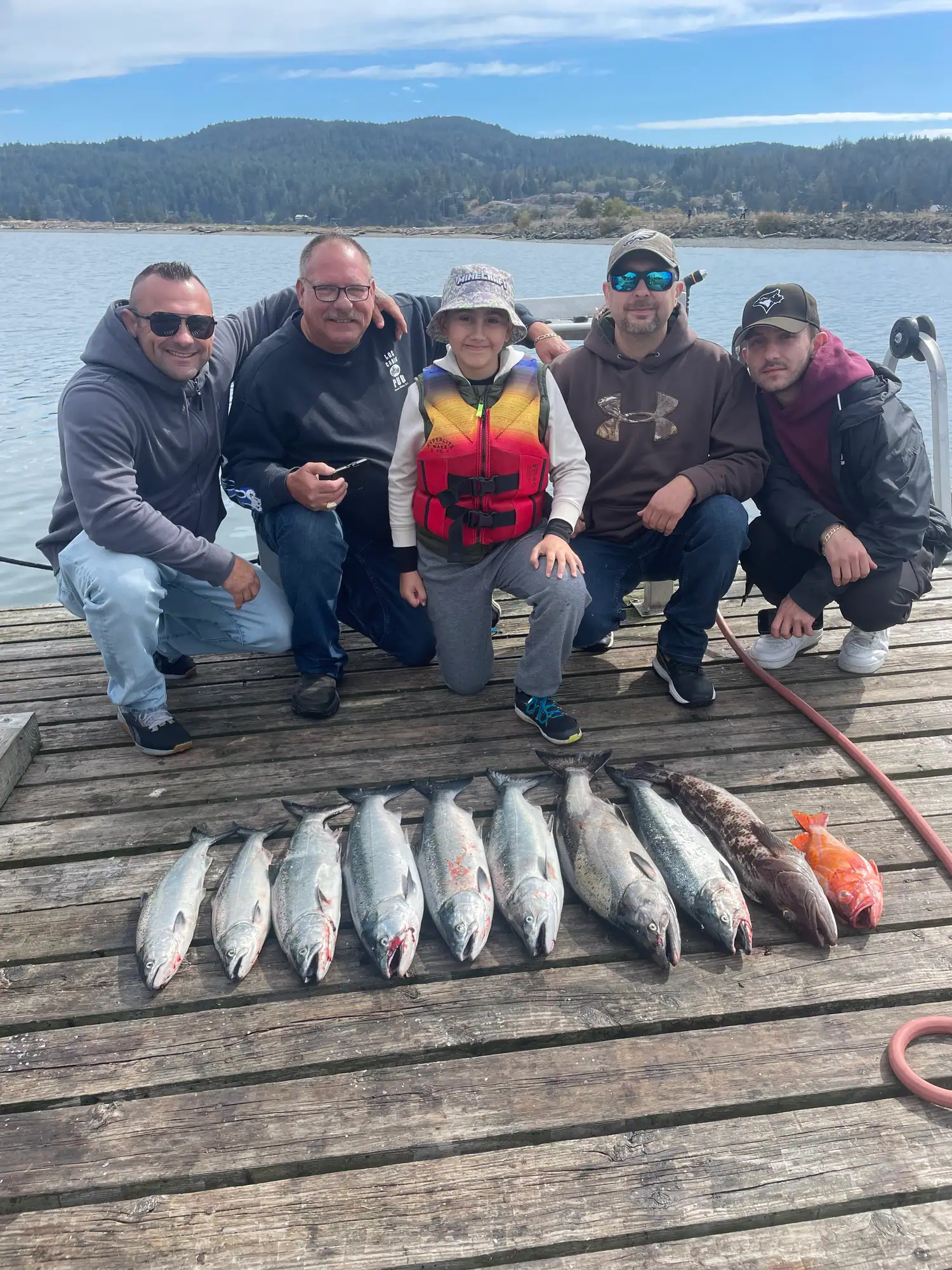
Good halibut bait needs scent, durability and movement. We build the spread around proven North Pacific staples and adjust it to the tide, depth and amount of unwanted activity.
Fresh salmon bellies bring oil and a strong natural scent. Salmon heads can create a substantial scent source and hold up while the gear soaks. Fresh herring is a classic for good reason: it offers oil, flash and a familiar forage profile. Octopus is exceptionally durable and adds texture and movement that stays on the hook. These are not gimmicks. Historical and modern International Pacific Halibut Commission material documents herring, salmon and octopus as established baits in the halibut fishery.
Rigging and placement matter as much as the ingredient list. We may combine a softer, oil-rich bait with something tougher so the hook keeps fishing. We stagger presentations, watch which rod gets touched first and change the spread when the fish tell us something. A few other locally proven ingredients and preparation tactics stay within the King Tide crew. Every good halibut operation keeps a little knowledge off the internet.
When the Whole Spread Goes Off
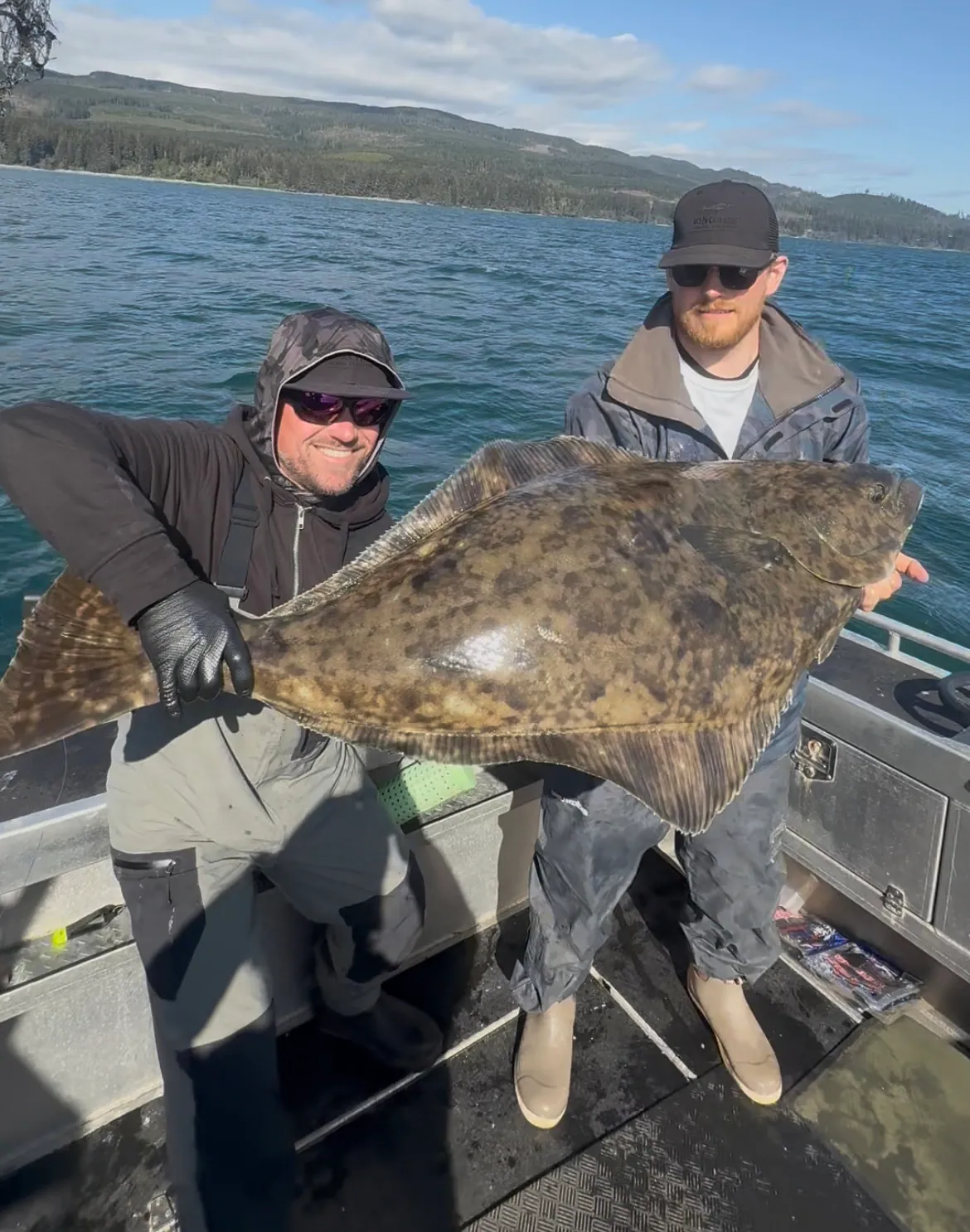
A halibut bite can begin with a small tremor in the rod tip. The fish may mouth the bait, settle over it and then load the rod with steady weight. At other times there is little hesitation. The rod bends, the circle hook finds its place and the fight is underway.
The most exciting moments come when the fish arrive together. Halibut may feed in loose groups, and it is not uncommon in productive Sooke fishing for several rods to get hit in quick succession. Four or five hookups can turn the deck into controlled action. Anglers need to keep their lines separated, listen to the captain and maintain steady pressure while the crew prepares for each fish at the surface.
That combination of a heavy fish, deep water and multiple bent rods is what makes a halibut trip memorable. These flatfish can feel like they are glued to the bottom before they begin to move. Then they use their broad bodies against the current, surge back toward depth and make every turn of the reel count.
Two Halibut Per Day and the Value of Two Days
This fall the daily limit in Area 20 is two halibut per person. The possession limit is the same as the daily limit, so it is also two. The annual limit is ten per licence year (April 1, 2026 to March 31, 2027), and no retained halibut may be longer than 112 centimetres head-on. Every retained fish must be recorded on your tidal licence. You can check the current rules on the DFO Area 20 regulations page.
The daily limit gives a group more flexibility during a productive bite. The possession limit is the key detail for a multi-day trip: fishing a second day does not allow a travelling guest to possess four halibut. A two-day itinerary can still be extremely useful. If someone did not reach their halibut allowance on the first day, we can use a suitable window on day two to pursue the remaining opportunity. If the group has completed its halibut fishing, we can direct more time toward Chinook salmon and other open opportunities.
We plan the two days around each group’s goals, the tides, current conditions and remaining retention allowances. That may mean starting with halibut on the best current and moving to salmon, or changing the order entirely. The value is the time and flexibility to fish effectively, rather than forcing every species into a fixed schedule.
Fall and Winter Chinook Complete the Trip
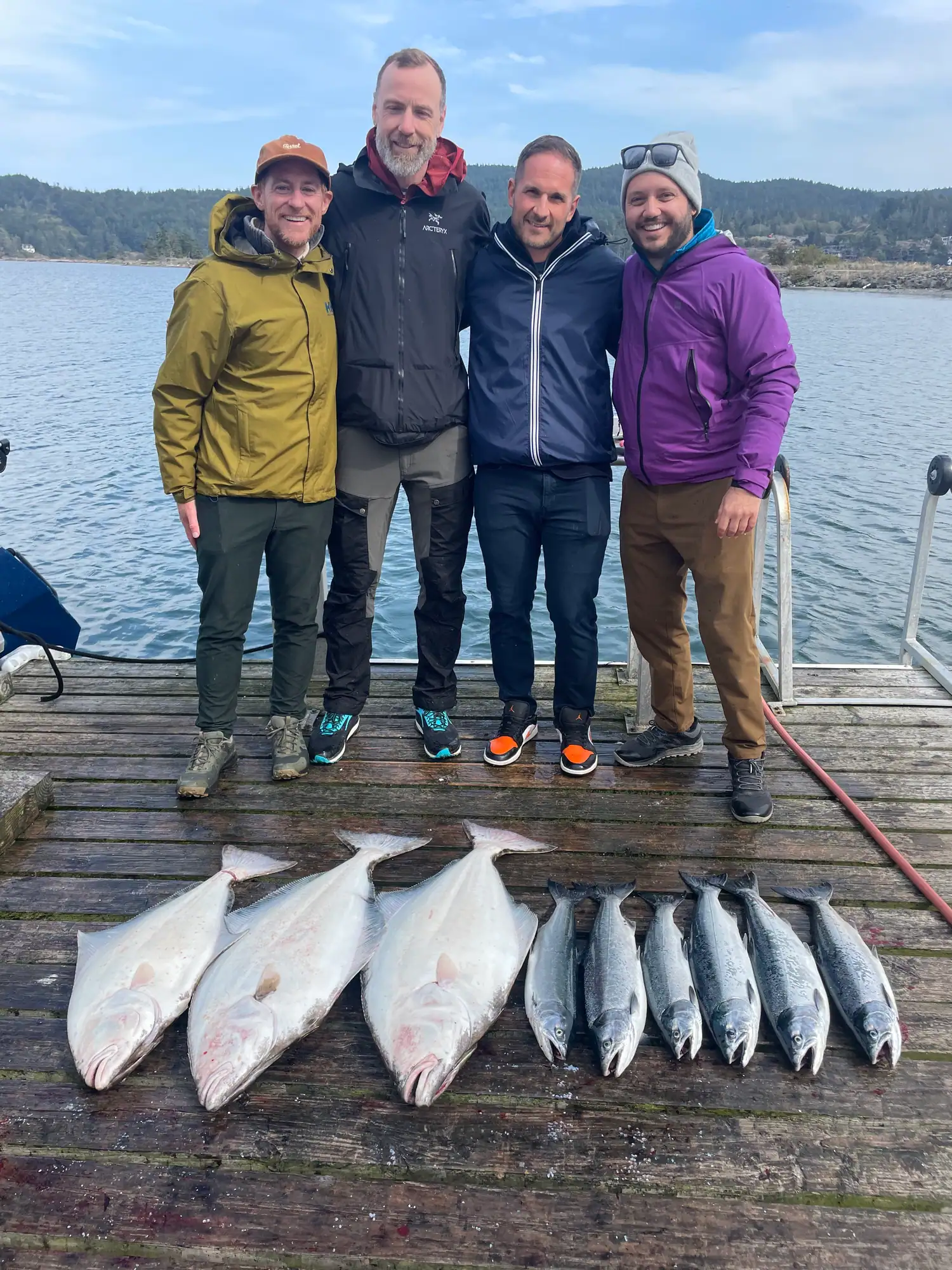
Sooke also offers productive Chinook fishing through the fall and winter in open portions of Area 20. These ocean-bright fish are prized at the table for their rich flavour, high oil content and deep reddish-orange flesh. They are also powerful sport fish. A Chinook in the high teens or low twenties can pull hard, change direction quickly and test both the angler and the tackle.
Chinook are the largest Pacific salmon species, and their strength gives a two-day Halibut & Salmon itinerary a completely different second dimension. One session may be spent watching heavy halibut rods on anchor. The next may involve trolling, a reel suddenly accelerating and a salmon running away from the boat. Current openings vary by subarea, and King Tide checks the regulations and conditions when building each trip plan. Read more about salmon fishing in Sooke.
Why Sooke Feels Different in Fall
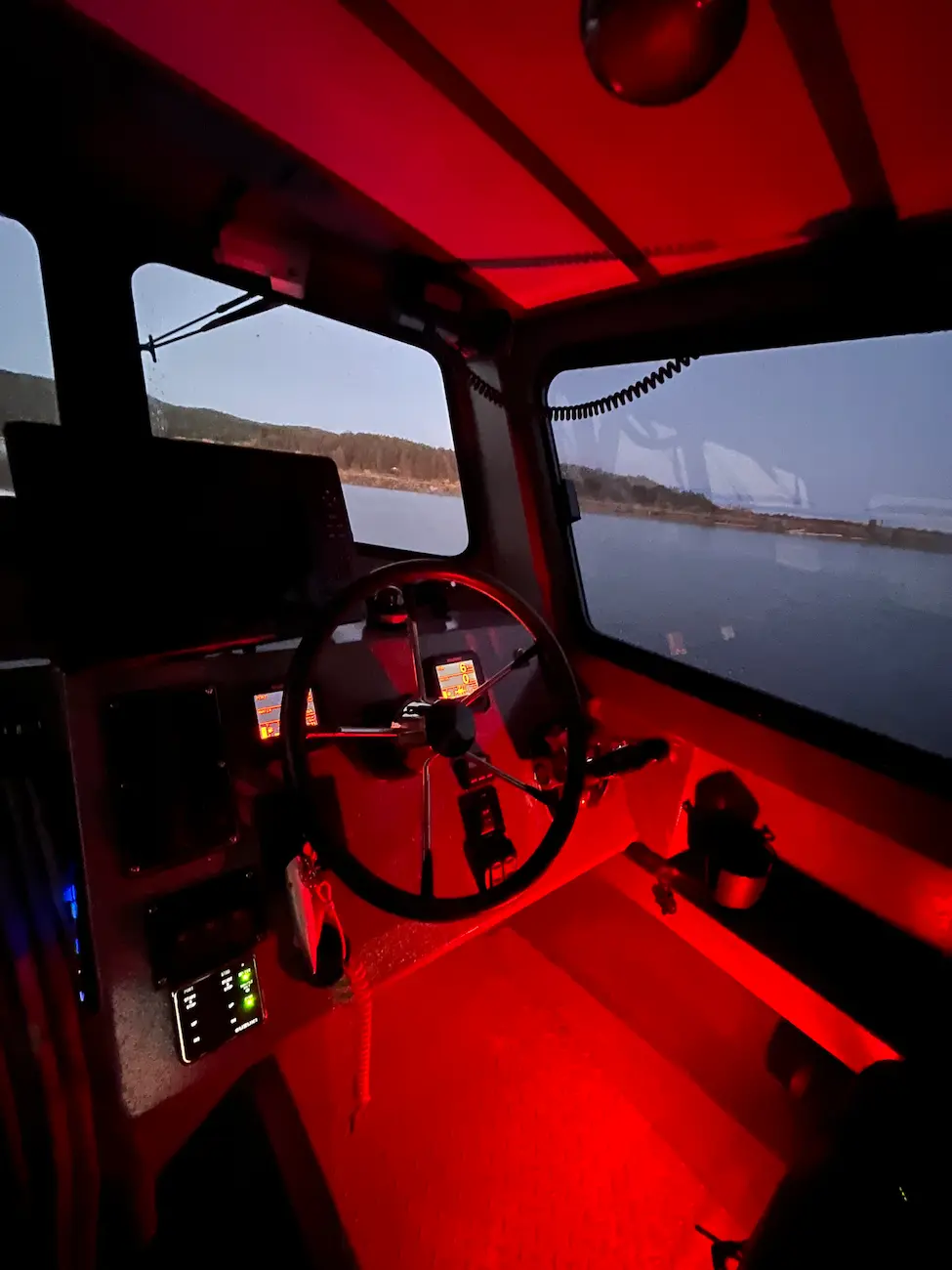
Fall brings some of the most enjoyable days on the water. The pace around the harbour eases, fewer boats are working the same grounds and calm weather windows can be spectacular. The Strait and coastline remain full of life. Seabirds work the surface, sea lions move through the area, and whales or other wildlife can appear during the run. Every day is different, which is part of the appeal.
Cool air is much easier to enjoy from the right boat. The Hawk and the 28-foot Northwest offer fully enclosed heated cabins, lounge seating and tables, plus private marine toilets. Large windows provide excellent views of the water and the rods, so guests can warm up without losing sight of the halibut bite. Departing from King Tide’s private Sooke dock also keeps the beginning and end of the day simple.
Fall weather still deserves respect. Wind and tide determine where and how we fish, and the captain chooses the safest, most effective plan for the day. The cabin adds comfort when the temperature drops or a shower passes through; it does not change the decisions required by the sea.
Stock Up on Turkeys During Hog-tober Fest
Around here, smaller halibut are often called chickens. The larger ones are turkeys. That makes October the natural home of King Tide’s Hog-tober Fest, where our turkeys have fins.
The name is fun, but the fishing opportunity is serious. Fall brings productive halibut windows, less traffic, efficient bait fishing and the chance to combine halibut with strong Chinook action. It is a timely way to stock the freezer for holiday dinners while enjoying a private Vancouver Island fishing trip built around your group.
King Tide’s Hog-tober Fest specials include single-day halibut options and longer Halibut & Salmon itineraries aboard the Hawk and Northwest. Large groups are welcome aboard the Northwest, while the Hawk remains an excellent private platform for smaller groups. Every charter includes premium rods and tackle, bait, catch cleaning and filleting, and first-class service from our private dock. Premium Catch Care from Dock to Destination is available for guests who want help with vacuum sealing, freezing, travel packaging or shipping through our processing partners.
Choose your dates, tell us which species matter most and let the crew build the most effective plan for the tides and conditions. The next rod that folds over could be your holiday turkey. Check dates and book your fall halibut trip.
Fall Halibut Fishing in Sooke: Quick Answers
Is fall a good time for halibut fishing in Sooke?
Yes. In our experience the fall halibut bite often improves as salmon move toward their rivers, dogfish pressure drops and fewer boats are on the grounds.
How many halibut can I keep in the fall?
In Area 20 the current daily limit is two halibut per person, and the possession limit is also two. The annual limit is ten per licence year, and no retained halibut may exceed 112 cm head-on. Always check the latest DFO rules before your trip.
Can I combine halibut and salmon on one trip?
Yes. Our Halibut & Salmon itineraries pair anchored halibut fishing with Chinook trolling in the open parts of Area 20, planned around your group's goals and the tides.